El BRAAAM de Inception: tres_paths_por_un_golpe_sonoro
Hans Zimmer, Mike Zarin y Zack Hemsey explican cómo surgieron los sonidos del tráiler de Inception, una pieza que se volvió inseparable de la película y_las redes_sociales.
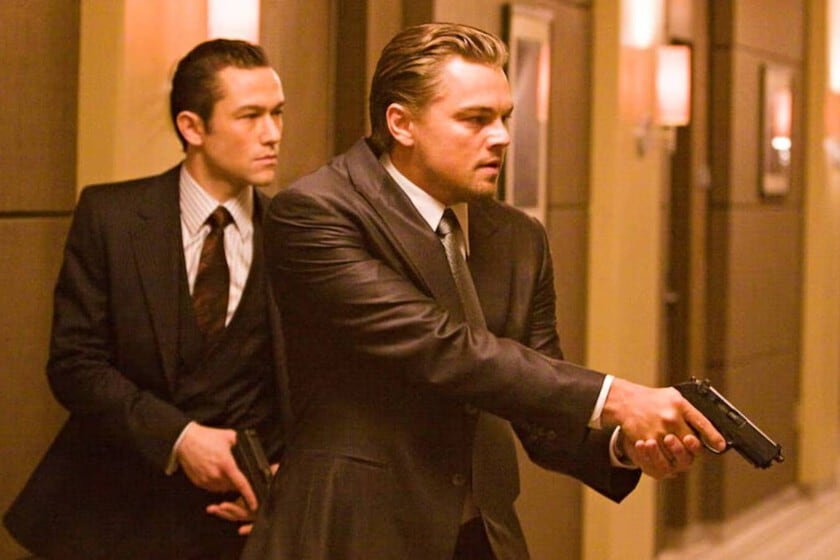
Recuerdo vividly an evening of 2010, when the trailer for a science-fiction thriller about dreams began circulating with a low, forceful rumble that seemed to come from the floor itself. The sequence of images was striking, but the sound was even more memorable: a single, enormous note that seemed to last forever and that anyone who watched it could immediately place in the cultural imagination. That was the BRAAAM, and behind it lay not one single author, but three musical paths that crossed, overlapped and, for a long time, generated an intriguing dispute over authorship.
A single sound, several stories
Hans Zimmer, the composer responsible for the film's official score, described his approach as a process of experimentation. Zimmer said he worked from the song Non, je ne regrette rien, performed by Édith Piaf, which director Christopher Nolan had already included in the screenplay. The idea was to use that reference as the starting point for building a sonic identity for the story. He recalled imagining a piano placed in the middle of a church, with a book on the pedal, while metal wind instruments exploited the resonance of the instrument. It was, in his words, a decision to experiment and see what would emerge from that starting point.
However, sound designer Mike Zarin later offered a more complex account of the sound's origins. Hired by BLT Communications to compose the music for the first teaser, Zarin received few instructions and worked with preliminary footage of Leonardo DiCaprio aboard a train. Together with collaborators Dave Rosenthal and Lauri Brown, he toured the city with a recorder, capturing sounds in the subway to construct the atmosphere. In the final stage of the project, Nolan sent them The Dark Knight soundtrack as a reference and asked them to build from that starting point. According to Zarin, the result of that process was the BRAAAM.
The third piece of the puzzle was Zack Hemsey, whom Warner Bros. hired to compose the music for the definitive trailer. His composition, titled Mind Heist, incorporated elements of the same sound effect and achieved enormous circulation. Hemsey signed a confidentiality agreement and did not take a public position on the authorship debate, but he did reflect on the impact of the work: it gave people a lot to talk about, was even parodied by South Park, and, for someone accustomed to composing anonymously, it was interesting to see how it took off on its own.
- Hans Zimmer developed his proposal by experimenting with piano and metal winds, taking Non, je ne regrette rien as a reference from the screenplay.
- Mike Zarin, Dave Rosenthal and Lauri Brown built the first teaser's sounds from field recordings, including subway noises, and later worked from a Nolan reference.
- Zack Hemsey composed Mind Heist for the final trailer and incorporated elements of the effect, without publicly claiming or denying exclusive authorship.
What is striking about this story is that it reflects the collaborative and almost accidental nature of much of the music we remember. The BRAAAM did not arise from a single room or a single composer, but from fragments, references, experiments and contributions that came together in a specific creative context. Instead of closing the debate by pointing to one name, it seems more accurate to think of three musicians who, from different places and with different resources, left their mark on a sound that became one of the most recognizable signatures in contemporary cinema.
For those who want to understand how that sound was built, my recommendation is to listen to the material from each stage in order: first the first teaser, then the definitive trailer, and finally the Zimmer score. That route lets you hear how the same idea was transformed, how a cinematic reference could be reworked from one version to another, and how, in a collaboration as complex as the one Nolan assembled, the most enduring results often come from work that no one completely owns. The BRAAAM remains, in that sense, not just a sound effect, but a small lesson in how the movies we remember are made.
Comentarios
0Todavía no hay comentarios. Sé el primero.
Seguí leyendo

La lucha silenciosa de Brad Pitt con un trastorno que pocos conocen: “Nadie me cree”

Internaron a Silvina Escudero y encendió las alarmas: “Un año difícil, pero acá estamos”
Sony ficha a Sadie Sink para 'Spider-Man 4': interpretará a Jean Grey en el UCM