
Michael Rosenbaum
Michael Rosenbaum explains why he left Smallville after its seventh season, how the departure of the original creators influenced his decision, and why a possible animated reunion remains uncertain.
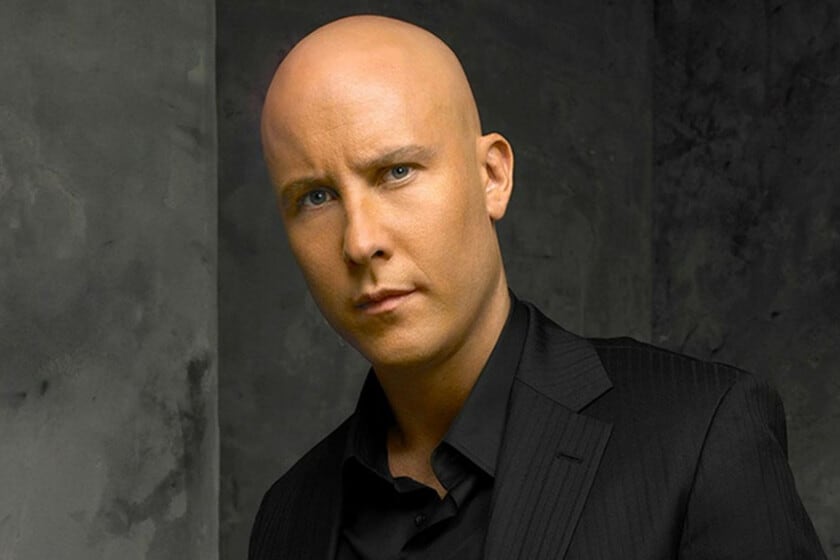
After years of playing Lex Luthor in Smallville, Michael Rosenbaum decided to leave the series after its seventh season. The choice was not the result of a single disagreement or an announced conflict with producers. Rosenbaum said he was ready to move forward professionally, and the simultaneous departure of the series' original creators, Alfred Gough and Miles Millar, gave him a natural point to end his participation.
A career decision at the end of the seventh season
Rosenbaum originally signed for six seasons. He later agreed to remain for an additional year, which means his exit was not simply the consequence of an expiring initial contract. When the seventh season ended, he could have continued, but chose not to renew. Looking back on that moment, he explained that he was prepared to take another step and explore new opportunities after spending several years portraying a character who would eventually become one of Superman's most important adversaries.
“I was ready to move forward and take a new step.”Michael Rosenbaum
The creative context also mattered. Gough and Millar, who had been with the series from its beginning, left the production at the same time. For Rosenbaum, their departure made the end of the seventh season feel like the right conclusion for his own chapter in the show. Without the original creative team in place, he did not see the same reason to remain, even though he still had the option to do so.
The following season demonstrated how substantially Smallville was changing. Kristin Kreuk and Laura Vandervoort also departed, Oliver Queen became more central to the story, and new characters such as Tess Mercer and Davis Bloome appeared. The series gradually shifted away from its initial identity as a teenage drama set in Clark Kent's hometown and toward a broader focus on Metropolis and the future life of Superman.
A return for the finale, but not for the crossover
Rosenbaum did return for the series finale. However, he declined an invitation to appear in the crossover known as Crisis in Infinite Earths. He said that the proposal did not convince him and that he did not want to share the screen with other versions of Lex Luthor. His position was especially clear in relation to stories involving the multiverse: if a production was going to feature several versions of the character, he preferred not to be part of that particular reunion.
“There is only room for one Lex. If you are going to tell a multiverse story, I do not want to be there with other Lexes.”Michael Rosenbaum
After leaving Smallville, Rosenbaum continued working in television, film and video games. His credits included the comedy series Impastor and appearances in the final two installments of the Guardians of the Galaxy films. He also provided his voice for Flash in animated productions based on DC characters. His career therefore continued beyond the role that made him especially recognizable to audiences.
More recently, Rosenbaum mentioned the possibility of an animated continuation of Smallville with Tom Welling, Gough and Millar. According to him, much of the original cast could be willing to return and provide voices for their characters. Nevertheless, the project has no announced date, and the actor's comments describe a possibility rather than a confirmed production. For viewers who remember Smallville as a long-running interpretation of Superman's early years, the idea offers a form of reunion, but it remains uncertain whether and when it will happen.
I would recommend following any concrete news about this project, while keeping expectations measured. Rosenbaum's own explanation suggests that his departure was driven by a professional decision and by the loss of the show's original creative leadership, rather than by a personal rupture with the series or its public. Even without a reunion, his seven seasons remain a distinctive chapter in the history of television adaptations of Superman.
Comentarios
0Todavía no hay comentarios. Sé el primero.
Seguí leyendo

Misión Imposible 8' va a ser la mejor y más asfixiante película de la saga con Tom Cruise al límite
Explosiva y frenética: ‘Nadie 2’ revela su tráiler y sigue el camino de John Wick
'Daredevil: Born Again' no se ha estrenado y ya es un éxito: Marvel renueva la serie por una temporada 2 en Disney+